 Skip to content

Mole Removal in NYC

Mole Removal in NYC
Moles are common skin growths that can appear anywhere on the body. While many moles are harmless, some may be bothersome, aesthetically unappealing, or potentially cancerous. At Park Plaza Dermatology, we specialize in mole removal, offering safe and effective treatments to eliminate unwanted or suspicious moles. Whether you’re looking to remove a mole for cosmetic reasons or medical concerns, our dermatology specialist provide expert evaluation and customized treatment plans in NYC.

Medically Reviewed by
Pinkas E. Lebovits, MD
Founder, Park Plaza Dermatology
Medical, Surgical & Cosmetic Dermatology
Written by: Park Plaza Dermatology Editorial Team
Medically reviewed by: Pinkas E. Lebovits, MD
Last updated: October 1, 2026
What is Mole
A mole is a small, dark skin growth on the skin that is made up of pigment-producing cells called melanocytes. Most Moles are common and are usually benign, meaning they are not cancerous. They can appear anywhere on the body in any size or shape. Most people have a few moles, and they may be present at birth or develop later in life.
While moles are generally harmless, some moles may be suspicious for skin cancer and should be evaluated by a healthcare provider. If you are concerned about a mole, it is important to seek medical attention to ensure the mole is not cancerous.
What Causes Moles?
Several factors can contribute to moles’ development, including genetics, exposure to ultraviolet (UV) light, and hormonal changes. People with a family history of moles are more likely to develop them. Sun exposure can also increase the risk of developing moles, as UV light can stimulate the production of melanocytes. Finally, hormonal changes that occur during pregnancy or the teenage years can also lead to the development of moles.
It’s important to note that moles are generally benign and do not cause health problems. However, it is essential to monitor moles for any changes, as some moles can develop into melanoma, a type of skin cancer. If you have any concerns about a mole, it is important to talk to a dermatologist or healthcare provider.
When should I be concerned about mole growth?
- A mole that is larger than a pencil eraser
- An asymmetrical mole with two halves that do not match in shape or color
- A mole with irregular borders or edges
- A mole with a mixture of colors, including shades of brown, black, and red
- A mole that is itchy, painful, or bleeding
- A mole that has changed in size, shape, or color over time
- You must see a doctor for a proper evaluation if you notice any of these signs.
Your doctor may recommend removing the mole and performing a biopsy to determine whether it is cancerous. Early detection and treatment of melanoma can help prevent cancer from spreading and increase the chances of a successful outcome.
Mole check or Mole testing for Skin Cancer Detection
Mole check or mole testing is an integral part of maintaining healthy skin. Moles are common skin growths that can occur anywhere on the body and are typically harmless. However, some moles may be atypical or change in size, shape, or color, which can signify cancer. That’s why it’s important to have regular mole check-ups to monitor any changes in your moles and identify any potential skin cancer early on when it is most treatable.
During a mole check, a dermatologist will examine your moles and look for any signs of concern, such as irregular shape, uneven color, or changes in size or texture. The specialist may recommend further testing, such as a biopsy, to confirm the diagnosis. Mole check or mole testing is a quick and painless process that can give you peace of mind and help ensure the health of your skin.
If you’re concerned about a mole or have a history of cancer in your family, it’s important to schedule regular mole check-ups with a dermatologist. At our clinic, we have a team of experienced mole dermatologists who are dedicated to providing the highest level of care. Take action to address your mole concerns now. Please book an appointment with us today and get the peace of mind you deserve.
What is Mole Removal and How It Works
Mole removal is a dermatological procedure designed to safely eliminate unwanted moles from the skin. Moles, also known as nevi, are clusters of pigmented skin cells that can vary in size, shape, and color. While most moles are benign, some can develop irregularities that may indicate potential skin cancer, such as melanoma.
At Park Plaza Dermatology, we offer two primary methods of mole removal:

This involves cutting out the mole along with a small margin of healthy skin. Stitches are used to close the area, ensuring precise removal with minimal scarring.
Laser Mole Removal
Ideal for smaller, non-cancerous moles, laser therapy breaks down pigmented cells using concentrated light energy, offering a non-invasive removal option with minimal recovery time.
Each method is tailored to the patient’s unique skin type, mole characteristics, and aesthetic goals. Our dermatologists carefully assess the mole before determining the most suitable removal technique.
Reasons for Undergoing Mole Removal
Patients seek mole removal for several reasons, including:
Cosmetic Concerns
Many individuals choose to remove moles that appear on highly visible areas, such as the face, neck, or hands. Large or irregularly shaped moles can impact self-confidence, and mole removal helps restore smooth, even-toned skin.
Suspicious or Cancerous Moles
If a mole changes in size, color, or shape, it may indicate a risk of skin cancer. A dermatologist should evaluate irregular moles, and in cases of concern, mole removal may be necessary for further biopsy and analysis.
Chronic Irritation
Moles that frequently rub against clothing, jewelry, or get caught during shaving can become inflamed or painful. Removing these moles eliminates discomfort and prevents ongoing irritation.
Bleeding or Itching Moles
Any mole that bleeds, crusts over, or causes persistent itching should be examined by a professional. These signs may indicate abnormal skin cell activity that requires medical attention.
Improved Skin Health and Hygiene
Some moles may trap dirt, sweat, or bacteria, making them prone to irritation or infection. Mole removal contributes to overall skin health and hygiene, especially in sensitive areas.
Different kinds of moles
Several types of moles can occur on the skin.
- Congenital moles
- Acquired moles
- Dysplastic moles
- Spitz nevi
- Blue nevi
- Hairy moles
- Atypical mole
- Melanoma

Congenital moles
Congenital moles, also known as congenital nevi, are present at birth and are usually benign. They are formed when cells in the skin called melanocytes grow in a cluster instead of being dispersed throughout the skin. It is important to monitor congenital moles closely, as they may have a slightly increased risk of developing into melanoma.
Acquired moles
Acquired moles appear later in life, usually after the age of 20. They may be either benign or cancerous and are formed when cells in the skin called melanocytes grow in a cluster instead of being dispersed throughout the skin. It is important to monitor acquired moles closely, as they may have a slightly increased risk of developing into melanoma.
Dysplastic moles
Dysplastic moles, also known as atypical moles, are irregular in shape with uneven borders and a mix of different shades of color. They are more likely to become cancerous and should be monitored closely by a dermatologist. Some may be removed for cosmetic reasons or if they are causing discomfort. It is important to discuss any concerns about moles with a dermatologist.
Spitz moles
Spitz moles are a type of benign skin tumor that appears in people with a family history of melanoma. They may have a slightly increased risk of developing into melanoma and should be monitored closely. Some may be removed for cosmetic reasons or if they are causing discomfort. It is important to discuss any concerns about moles with a dermatologist.
Blue moles
Blue moles are usually benign and are caused by an excess of melanin in the skin cells. They are not typically considered to be a cause for concern, but it is always important to have any unusual moles checked by a dermatologist to ensure they are not cancerous.
Hairy moles
Hairy moles are moles that have hair growing out of them and are usually benign. However, they may have a small risk of becoming cancerous if left untreated. It is important to monitor them closely and see a dermatologist regularly for skin exams. Some may be removed for cosmetic reasons or if they are causing discomfort. It is important to discuss any concerns about moles with a dermatologist and practice good sun protection.
Atypical moles
Atypical moles are larger than normal moles and have irregular borders and color. They have an increased risk of becoming cancerous and should be monitored closely by a dermatologist. Some may be removed for cosmetic reasons or if they are causing discomfort. It is important to discuss any concerns about moles with a dermatologist and practice good sun protection.
Melanoma
Melanoma is a type of skin cancer that develops in the cells that produce pigment (melanocytes). It is often characterized by the appearance of a new mole or the changes in an existing mole, such as irregular borders or an uneven mix of colors. Melanoma is a serious and potentially deadly form of skin cancer and should be monitored closely by a dermatologist. Early detection and treatment are crucial for improving the chances of a successful outcome.
To diagnose melanoma, a dermatologist will examine the mole and may take a biopsy to test the cells for cancer. The dermatologist will also perform a full-body skin exam to check for other moles and any signs of skin cancer.
There are several types of treatment for melanoma, including surgery to remove the cancerous cells, chemotherapy, and immunotherapy. The specific treatment plan will depend on the stage and location of the melanoma.
Recognizing the signs of melanoma and seeing a dermatologist regularly for skin exams is important. Some ways to recognize melanoma include:
- The appearance of a new mole or the changes in an existing mole, such as irregular borders or an uneven mix of colors
- A mole that is larger than a pencil eraser
- A mole that is asymmetrical or has uneven borders
- A mole that is more than one color or has shades of brown, black, pink, red, white, or blue
- A mole that is itchy, painful, or bleeds
Melanoma is a serious and potentially deadly form of skin cancer that requires close monitoring by a dermatologist. Early detection and treatment are crucial for improving the chances of a successful outcome. It is important to practice good sun protection, such as wearing sunscreen and protective clothing, to reduce the risk of developing melanoma. Regular visits to a dermatologist for skin exams are also essential in detecting and treating melanoma early.

Mole Removal Before & After Pictures
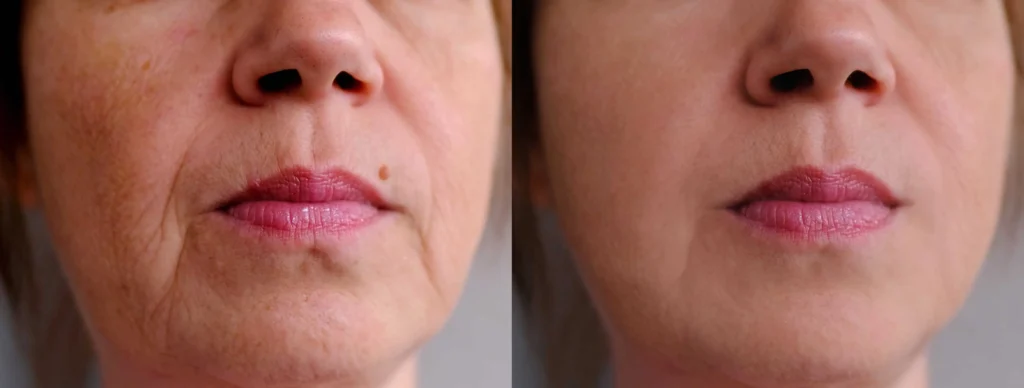
The Mole Removal Process: What to Expect
Consultation
Your mole removal journey begins with a thorough consultation at Park Plaza Dermatology. Our dermatologists will:
- Examine the mole to determine if it is benign or requires further testing.
- Discuss your aesthetic goals and concerns.
- Explain the most suitable removal method based on the mole’s size, depth, and location.
- Address any questions you may have about the procedure, recovery, and potential scarring.
Preparation
Before your mole removal appointment, we recommend:
- Avoiding sun exposure to prevent skin irritation.
- Discontinuing blood-thinning medications (if advised by your doctor) to reduce the risk of bleeding.
- Keeping the area clean and free of makeup or lotions on the day of the procedure.
- Informing your dermatologist of any history of keloid scarring to determine the best healing approach.
The Day of the Procedure
The procedure is performed in-office and typically takes 15 to 45 minutes, depending on the removal method
Surgical Excision
- The treatment area is numbed with local anesthesia.
- The dermatologist carefully removes the mole with a scalpel.
- Stitches may be placed if the mole was deep or large.
- A small bandage is applied, and post-care instructions are provided.
Laser Mole Removal
- A laser device targets the mole’s pigmentation without cutting the skin.
- The mole gradually fades over several weeks.
- No stitches are required, and recovery is faster than with excision.
Mole Removal Recovery Timeline
First 24-48 Hours
- Mild redness, swelling, and slight tenderness around the treated area.
- Patients should avoid touching, scratching, or exposing the area to water for prolonged periods.
1-2 Weeks
- Healing progresses with scab formation over the excised area.
- For laser treatments, the mole will darken and gradually fade.
- Stitches (if applicable) may be removed after 7-14 days.
3-4 Weeks
- The skin continues to regenerate, and redness subsides.
- Sunscreen is essential to prevent hyperpigmentation.
Long-Term Healing
- The skin texture normalizes over several months.
- Any residual scarring will continue to fade over time.
Following proper aftercare, such as applying prescribed ointments and avoiding sun exposure, ensures the best healing outcome.
The Cost of Mole Removal
The cost of mole removal varies depending on factors such as the size, location, and type of mole, as well as the method used for removal. Benign moles that are removed for cosmetic reasons may be treated with shave excision or laser removal, both of which are relatively quick and minimally invasive. However, if a mole appears atypical, changes in size or color, or raises concerns about potential malignancy, a surgical excision with biopsy may be required, increasing the cost due to pathology lab fees and follow-up care. Additionally, moles located in sensitive or highly visible areas, such as the face, may require specialized techniques to minimize scarring, which can also impact the overall price.
At Park Plaza Dermatology, we offer personalized mole removal treatments based on each patient’s medical and cosmetic needs. If a mole is deemed medically necessary for removal, insurance may cover part or all of the procedure, especially if there is concern about skin cancer or abnormal cell growth. However, for elective cosmetic mole removal, patients should expect out-of-pocket expenses, which vary depending on the removal technique used and the number of moles being treated. Our team provides transparent pricing, insurance verification, and flexible payment options to ensure that mole removal is both accessible and affordable. During your consultation, we will assess your mole, discuss treatment options, and provide a detailed cost estimate, allowing you to make an informed decision about your care.
Why Choose Park Plaza Dermatology for Your Mole Removal?
When choosing mole removal in NYC, patients trust Park Plaza Dermatology for:
- Dermatology Specialist with extensive experience in mole evaluation and removal.
- Advanced Technology including surgical and laser mole removal.
- Minimized Scarring Techniques for optimal cosmetic results.
- Comprehensive Skin Cancer Screening to assess suspicious moles.
- Personalized Treatment Plans tailored to each patient’s needs.
- Convenient NYC Location with same-day appointments available.
Frequently Asked Questions
Mole removal may be covered if the mole is suspicious, painful, or medically necessary. Cosmetic removals are typically not covered. Contact our office for insurance verification.
Side effects are rare but may include minor scarring, temporary redness, or mild discomfort. Our dermatologists use advanced techniques to minimize risks and ensure smooth healing.
Once removed, moles do not grow back. However, new moles may develop over time, making routine skin exams essential for long-term skin health.
At-home mole removal is unsafe and not recommended due to the risk of infection, scarring, and incomplete removal. Always seek professional dermatological care.
Removing moles is generally a good idea if the mole is cancerous, large, and unsightly or if it is causing discomfort or irritation. However, it is essential to consult with a dermatologist before removing any moles, as there may be potential risks or complications associated with mole removal.
It is not recommended to remove a mole yourself, as this can be dangerous and may cause infection or scarring. Only a trained medical professional, such as a dermatologist, should perform mole removal.
The time required for mole removal can vary depending on the method used and the number of moles being removed. Surgical excision is a removal method that can take a few minutes to an hour or more, depending on the size and location of the mole.. Cryotherapy and laser therapy are generally faster and can take anywhere from a few seconds to a few minutes per mole.
It is important to consult a dermatologist to determine the best treatment option and discuss the expected length of the mole removal process. The dermatologist will provide more detailed information on the specific method they will use and how long the procedure will likely take.
Schedule Your Mole Removal in NYC Today!
If you’re considering mole removal in NYC, Park Plaza Dermatology provides safe, effective, and expert treatments for both cosmetic and medical concerns. Book your consultation today to ensure your skin remains healthy, clear, and cancer-free.
