Skip to content


If you’ve been dealing with persistent facial redness or breakouts that don’t seem to improve, you may be wondering whether you’re dealing with acne or something else entirely. Because both acne and rosacea can cause red bumps and irritated skin, it’s easy to mistake one for the other.
Although they may look similar at first, rosacea and acne are two different skin conditions with different causes and treatment approaches. Understanding the differences is important because using acne-targeted products can sometimes worsen rosacea symptoms, while treating rosacea alone won’t address acne caused by clogged pores.
Here’s how to recognize the differences and when it’s time to see a dermatology provider.
Why Rosacea and Acne Are Often Confused
Rosacea and acne share several visible symptoms. Both commonly affect the face and can cause redness, inflamed bumps, and skin irritation. Because of these similarities, many people assume they have acne when they may actually have rosacea or vice versa.
The biggest challenge is that both conditions often develop gradually. Someone may begin treating their skin with over-the-counter acne products without realizing they’re managing the wrong condition. If symptoms continue or worsen, it’s often a sign that a professional evaluation is needed.
What Is Acne?
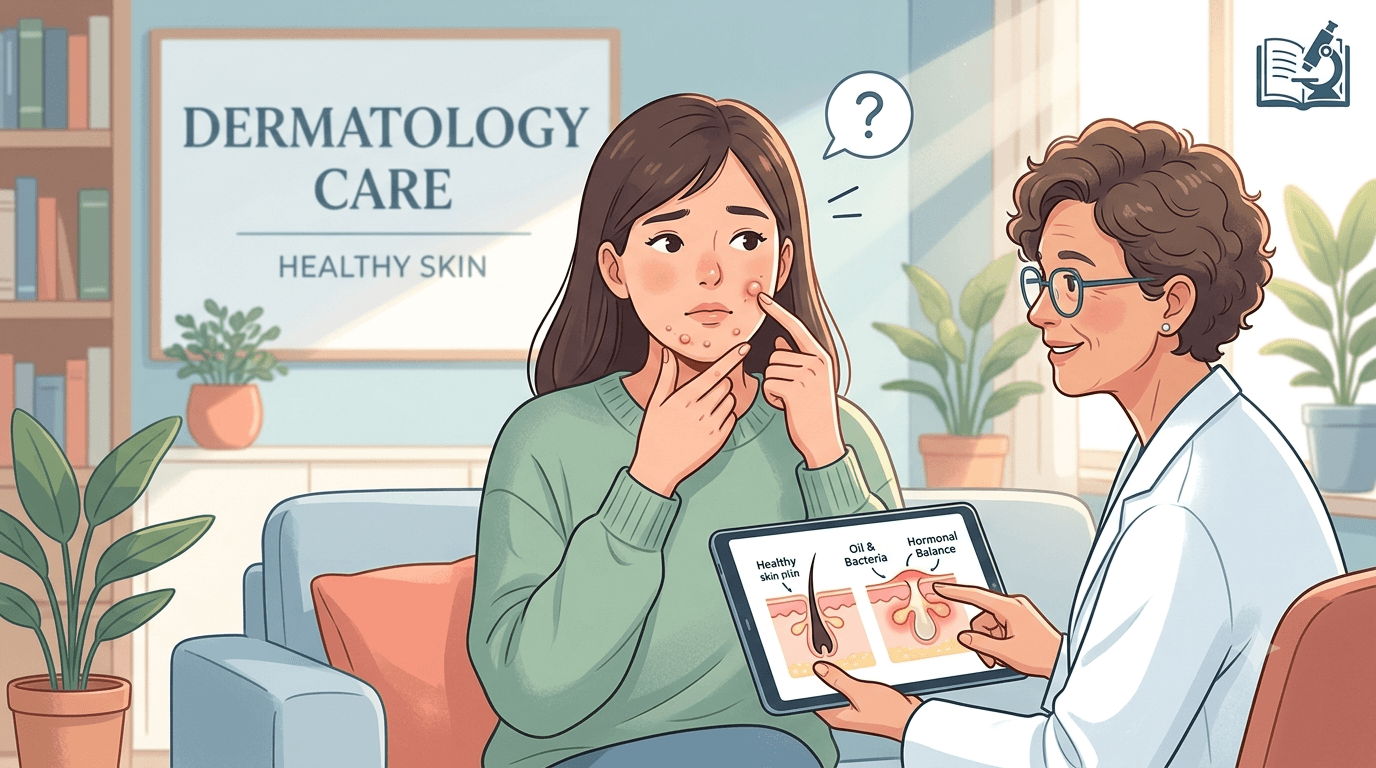
Acne is one of the most common skin conditions and develops when hair follicles become clogged with excess oil, dead skin cells, and bacteria. This combination causes inflammation that can lead to various blemishes.
Depending on the severity, acne may include:
- Whiteheads
- Blackheads
- Papules
- Pustules
- Nodules or cysts
While acne often begins during the teenage years, many adults continue to experience breakouts well into their 20s, 30s, and beyond. Hormonal changes, stress, skincare products, and genetics can all contribute to adult acne.
What Is Rosacea?
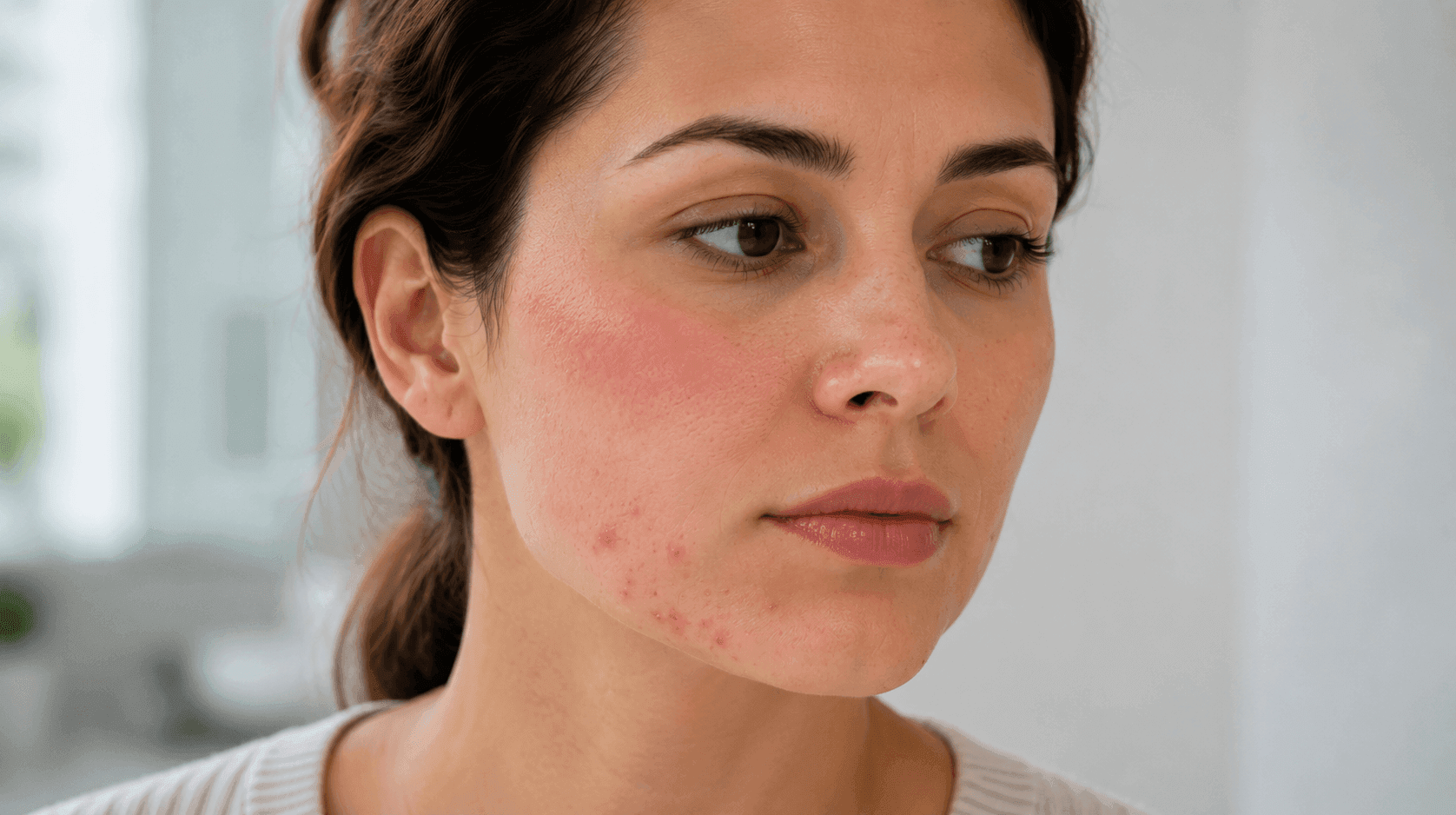
Rosacea is a chronic inflammatory skin condition that most often affects the central part of the face. Unlike acne, rosacea is not caused by clogged pores.
People with rosacea may experience:
- Persistent facial redness
- Episodes of flushing
- Small red bumps that resemble acne
- Visible blood vessels
- Burning or stinging sensations
- Increased skin sensitivity
Rosacea tends to develop gradually and often flares in response to specific triggers. Although symptoms vary from person to person, early diagnosis can help reduce flare-ups and improve long-term skin health.
Rosacea vs. Acne: Key Differences
Although acne and rosacea may appear similar, several characteristics help distinguish one from the other.
| Feature | Acne | Rosacea |
| Typical age | Often begins during the teenage years, but can affect adults | Most commonly develops in adults |
| Blackheads or whiteheads | Common | Typically absent |
| Facial redness | Usually limited to areas with blemishes | Persistent redness is common |
| Visible blood vessels | Uncommon | Frequently present |
| Flushing | Rare | Common |
| Skin sensitivity | May occur | Often noticeable |
| Primary cause | Clogged pores, oil production, inflammation | Chronic inflammatory condition |
While this comparison can be helpful, it’s important to remember that symptoms don’t always follow a textbook pattern. Some patients may have features of both conditions.
Common Rosacea Triggers
Unlike acne, rosacea symptoms are often influenced by environmental and lifestyle factors. Triggers vary from person to person, but many patients notice flare-ups after exposure to:
- Sun exposure
- Hot weather
- Emotional stress
- Alcohol
- Spicy foods
- Hot beverages
- Vigorous exercise
Identifying personal triggers can help reduce flare-ups, but it doesn’t replace an accurate diagnosis or treatment plan.
Can You Have Both Rosacea and Acne?
Yes. Some patients experience both acne and rosacea at the same time, making diagnosis more challenging.

For example, someone may have acne caused by clogged pores while also experiencing persistent facial redness and flushing associated with rosacea. Because treatment approaches differ, addressing only one condition may leave the other untreated.
A dermatology provider can evaluate your symptoms, identify whether one or both conditions are present, and recommend a treatment plan based on your individual skin concerns.
When to See a Dermatology Provider
Occasional breakouts or facial redness are common, but persistent symptoms deserve professional evaluation.
Consider scheduling an appointment if you notice:
- Facial redness that doesn’t go away
- Acne treatments that aren’t improving your skin
- Frequent flushing
- Burning or stinging sensations
- Visible blood vessels
- Painful or recurring breakouts
- Symptoms affecting your confidence or daily routine
Early diagnosis often helps prevent symptoms from becoming more difficult to manage over time.
How Dermatology Providers Diagnose Rosacea and Acne
Diagnosing rosacea or acne involves more than simply looking at the skin. A dermatology provider will evaluate your medical history, symptom patterns, skincare routine, and possible triggers.
They’ll also look for characteristics that distinguish one condition from another, such as clogged pores, persistent redness, visible blood vessels, or flushing episodes.
An accurate diagnosis helps ensure that treatment is targeted to the condition causing your symptoms rather than relying on trial-and-error products.
How Park Plaza Dermatology Can Help
At Park Plaza Dermatology, dermatology providers evaluate facial redness, breakouts, and other inflammatory skin conditions with a personalized approach. Every patient’s skin is different, which is why treatment begins with identifying the underlying cause rather than focusing only on visible symptoms.
Whether you’re experiencing adult acne, rosacea, or a combination of both, your care plan is tailored to your skin type, symptoms, and long-term goals. Our team focuses on helping patients manage flare-ups, improve skin health, and better understand the factors contributing to their condition.
Next Steps
Rosacea and acne may look alike, but they require different approaches to diagnosis and treatment. If you’ve been treating your skin without seeing improvement, it may be time to look beyond over-the-counter products.
A dermatology provider can determine the cause of your symptoms and recommend a plan tailored to your specific skin concerns. If you’re experiencing persistent redness, recurring breakouts, or both, consider scheduling an appointment with Park Plaza Dermatology to take the next step toward healthier skin.