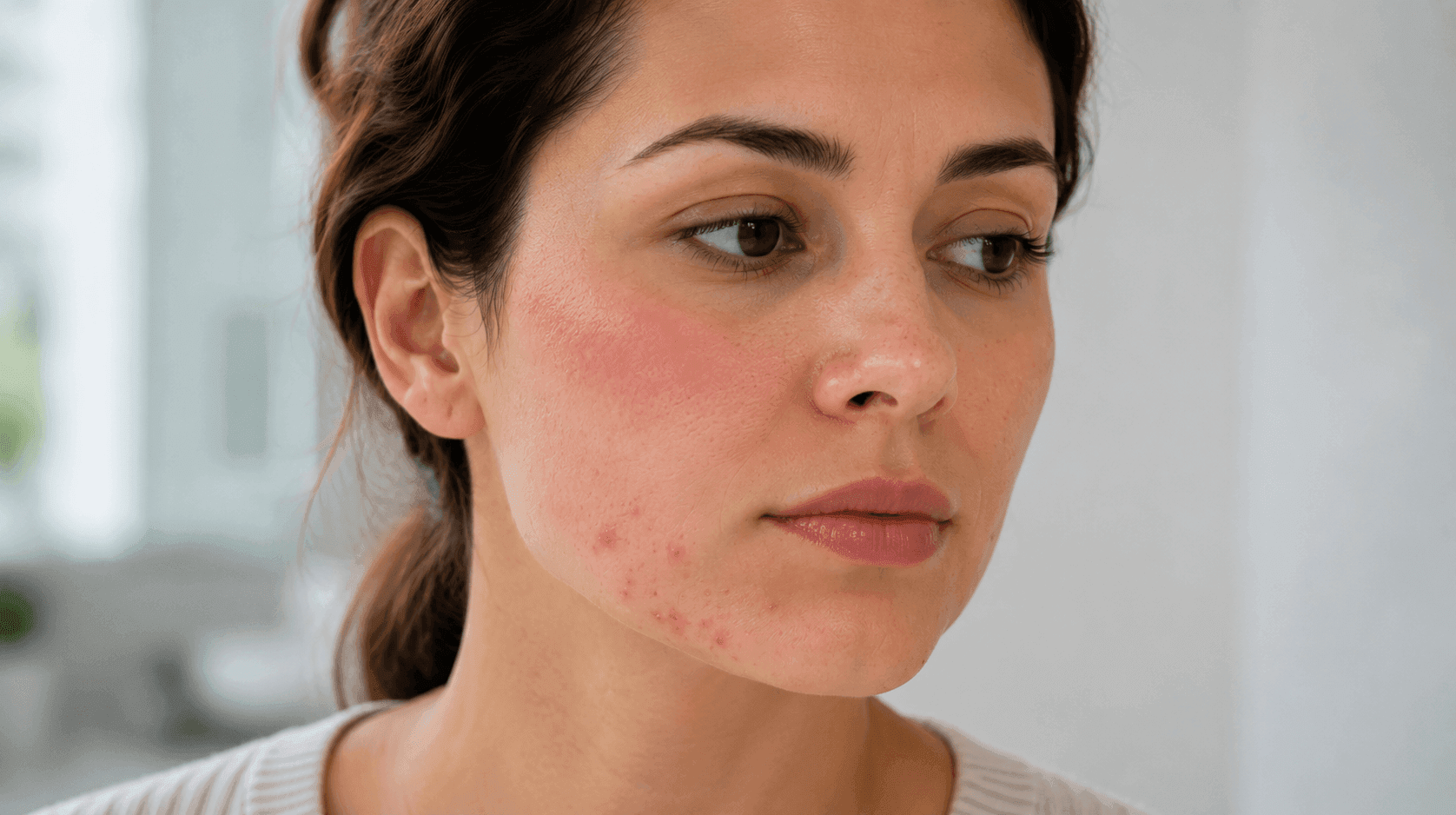
Skip to content

When spring arrives in NYC, most people think about blooming trees, warmer weather, and longer days. But along with the seasonal shift comes something less welcome: allergy season. While many people expect sneezing and congestion, fewer realize that spring allergies can significantly affect the skin.
For some, allergies trigger sudden hives. For others, they worsen eczema, cause rashes, or lead to persistent itching that doesn’t respond to over-the-counter products. Understanding how spring allergens affect your skin and when to see a dermatology provider can help you prevent minor irritations from becoming ongoing problems.
Why Spring Triggers Skin Allergies
Spring brings an increase in airborne allergens such as tree pollen, grass pollen, and mold spores. These particles don’t just irritate the respiratory system; they can also affect the skin, especially in individuals with sensitive or reactive skin.
Several seasonal factors contribute to skin reactions:
- Increased pollen exposure outdoors
- Open windows, allowing allergens inside
- More sweating as temperatures rise
- Switching skincare or sunscreen products
- Wearing lighter fabrics that increase friction
For individuals with a compromised skin barrier, including those with eczema or chronic dryness, these environmental shifts can lead to inflammation more quickly.
Hives (Urticaria): Sudden, Itchy, and Unpredictable
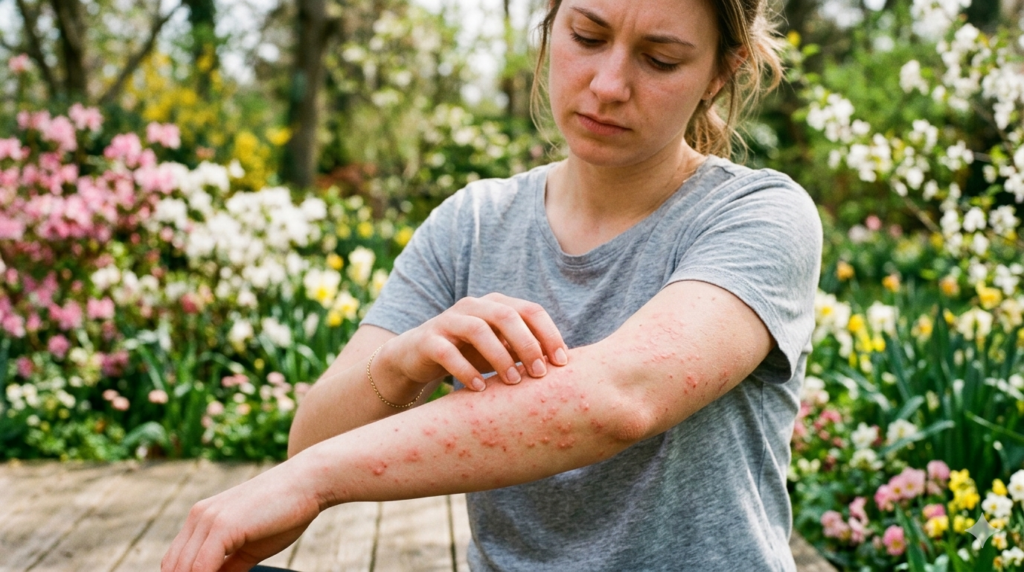
One of the most common spring-related skin reactions is hives, also known as urticaria. Hives appear as raised, red or skin-colored welts that can vary in size and often feel intensely itchy. They may appear suddenly, disappear within hours, and then reappear in a different location.

Spring triggers for hives can include:
- Pollen exposure
- Temperature changes
- Heat and sweating
- Environmental allergens
- Stress combined with seasonal factors
While occasional hives may resolve on their own, recurring or persistent hives warrant evaluation. When hives last longer than a few days or return frequently, a dermatology provider can help determine whether they are allergy-driven, stress-related, or part of a chronic condition.
Allergic Rashes vs. Irritant Rashes
Not every spring rash is the same. There’s an important difference between allergic contact dermatitis and irritant dermatitis, though they can look similar.
Allergic contact dermatitis occurs when the immune system reacts to a specific substance. ‘
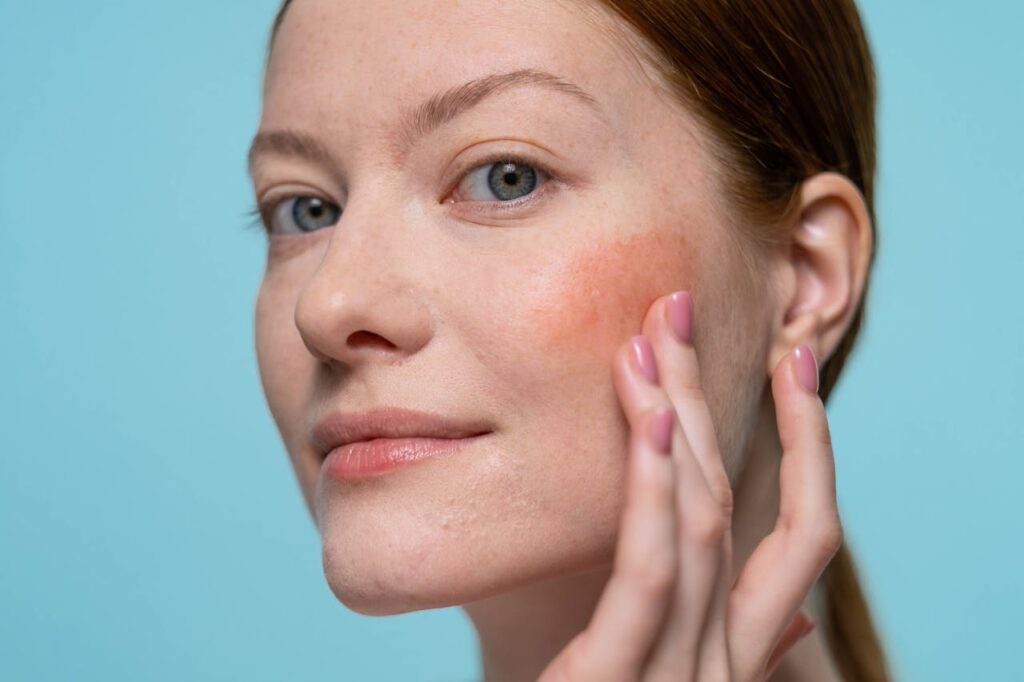
Common spring triggers include:
- New sunscreens or skincare products
- Fragrances
- Laundry detergents
- Plants and pollen
- Topical medications
Irritant dermatitis, on the other hand, results from repeated exposure to something that physically disrupts the skin barrier, such as sweat, friction, or harsh cleansers.
Because these rashes often appear on the face, neck, hands, or skin folds, patients frequently assume they are dealing with “just sensitive skin.” However, without identifying the exact trigger, symptoms may continue or worsen.
When Seasonal Allergies Worsen Chronic Skin Conditions
Spring allergies don’t just cause new rashes; they can also flare existing skin conditions.
For patients with eczema, psoriasis, or chronic dermatitis, airborne allergens can amplify inflammation. Increased itching leads to scratching, which further damages the skin barrier, creating a cycle of irritation.
This cycle can result in:
- Thickened or darkened patches
- Increased redness
- Secondary irritation from scratching
- Sleep disruption due to itching
When chronic conditions flare during seasonal transitions, simply switching moisturizers is often not enough. Professional evaluation helps determine whether the flare is allergy-related or part of the underlying condition.
Why Antihistamines and OTC Creams Aren’t Always Enough
Many people try to manage spring rashes on their own with antihistamines or over-the-counter hydrocortisone creams. While these can be helpful in mild cases, they do not address all types of inflammatory skin reactions.
Antihistamines may reduce itching in true allergic reactions but are less effective for irritant dermatitis. Meanwhile, overusing topical steroids without guidance can thin the skin or mask symptoms without treating the root cause.
If a rash returns every spring, spreads despite treatment, or fails to improve within several days, it’s a sign that a more targeted approach is needed.
When to See a Dermatology Provider
Spring skin reactions are common, but certain symptoms should prompt evaluation:

- Hives lasting more than a few days or recurring frequently
- Rashes that spread or worsen
- Severe itching that disrupts sleep
- Thickened, scaly, or painful patches
- Skin reactions that return each spring
- No improvement with basic at-home care
Early evaluation often leads to faster relief and prevents recurring flare-ups throughout the season.
How Dermatology Providers Diagnose Skin Allergies
Diagnosis begins with a detailed history and skin examination. A dermatology provider will assess the rash’s pattern, location, and timing, as well as possible environmental or product triggers.
In some cases, further evaluation, such as patch testing, may be considered to identify specific allergens. This helps pinpoint the exact substance causing repeated reactions, allowing patients to avoid triggers rather than simply managing symptoms.
The goal isn’t just to calm the current flare; it’s to prevent the next one.
How Park Plaza Dermatology Can Help
At Park Plaza Dermatology, dermatology providers evaluate seasonal skin reactions with a careful, individualized approach. Whether you’re experiencing sudden hives, recurring spring rashes, or worsening eczema, identifying the underlying trigger is key.
Rather than rotating products or guessing at solutions, professional evaluation helps clarify whether your symptoms are allergy-driven, irritation-related, or part of a chronic inflammatory condition. With a personalized plan, patients can reduce flare frequency and better manage seasonal changes.
Managing Spring Skin Allergies Going Forward
Preparation is often more effective than reaction. As spring approaches, consider:
- Supporting your skin barrier with consistent moisturization
- Avoiding frequent product changes during peak allergy season
- Rinsing skin after heavy outdoor exposure
- Seeking early evaluation if symptoms begin to escalate
Seasonal allergies may be predictable, but uncontrolled skin reactions don’t have to be.
Next Steps
If your skin becomes itchy, inflamed, or unpredictable each spring, you don’t have to manage it alone. While many seasonal reactions are mild, persistent or recurring symptoms deserve professional evaluation.
If you’re experiencing spring-related hives, rashes, or irritation, consider scheduling an appointment with Park Plaza Dermatology. Identifying the cause early can help you enjoy the season without ongoing discomfort.